
 |
|
|
• Architecture |

|
|
|
Reflections and Insights
|
|
| ACCESSORY DWELLING UNITS Articles |
|
| California ADU Law Updates Effective January 1, 2026 | |
| California Assembly Bill 2533 | |
| What's Changing for ADUs in 2026? | |
| You Too Can Have an ADU | |
| ADUs in Santa Cruz County: Current Regulations | |
| Also | |
| Reflections and Insights: Implementing the Principles of the Not So Big House | |
You Too Can Have an ADU: 6 Ways an ADU or JADU Can Deliver Real ROI
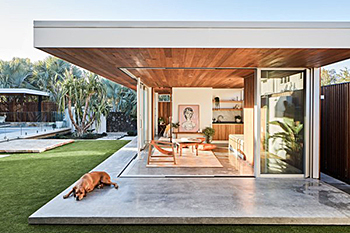 An ADU can be excellent long-term investment, offering both flexibility for one’s family and income-producing use (credit: Dwell Magazine)
California homeowners are discovering a powerful way to generate passive income, house family affordably, and increase property value — all without moving. Accessory Dwelling Units (ADUs) and Junior ADUs (JADUs) make it possible to turn unused space into opportunity.
What Are ADUs and JADUs?
An ADU is a secondary dwelling with complete, independent living facilities for one or more persons. It can be:
• Attached to the main house
• Detached as a separate building
• Converted from existing space, such as a garage, basement, or storage area
A JADU, or Junior ADU, is a smaller unit — up to 500 square feet — that’s attached to the primary home and may share kitchen or bathroom facilities.
Both ADUs and JADUs can be excellent long-term investments while offering flexibility for family or income-producing use.
California’s ADU Laws Have Changed — in Your Favor
Before 2016, local zoning restrictions made ADUs financially impractical in most cities. Thanks to statewide legislation, homeowners can now legally build, convert, and permit ADUs and JADUs on single-family lots.
You can even have one of each — meaning your property could contain a main dwelling, one ADU, and one JADU. These changes have made ADUs one of the most popular strategies in California for offsetting mortgages, generating rental income, and boosting property value.
The Investment Equation
Calculating return on investment (ROI) is straightforward:
Compare the cost of design, permitting, and construction with projected rental income and increased resale value.
Converted structures like garages often yield the highest ROI because they reduce construction costs. JADUs are the most affordable to build since they usually reuse existing space and share utilities.
Permitting takes time — and experience matters. Hiring an architect familiar with ADU design and approval can streamline the process and prevent costly mistakes.
Six Ways an ADU or JADU Can Pay for Itself
#1: Rent the ADU/JADU to a Tenant
The most direct path to ROI is simple: rent it out. A well-designed ADU can generate steady monthly income and significantly offset your mortgage. Before setting rent, research local market rates using comparison tools like Rentometer or Zillow Rentals. Remember to screen tenants carefully — they’ll be sharing the property with your main residence.
#2: Use It as a Home Office or Studio
Working from home has become the norm, but not everyone wants their “office” in the living room. An ADU or JADU can provide a quiet, dedicated workspace — ideal for remote professionals, creatives, and entrepreneurs. If you’re self-employed, you may also be eligible for home office tax deductions based on the portion of the property used exclusively for work. (Consult your tax advisor for details.)
#3: Build It as a Coworking Space
Coworking isn’t just for commercial buildings. Some homeowners are transforming ADUs into small shared workspaces that generate rental income from multiple users. Just note: ADUs must include basic facilities such as a bathroom and kitchenette, even for nonresidential use. Check with your local jurisdiction before launching a coworking model to ensure compliance with occupancy and zoning requirements.
#4: Create a Family or Roommate Dwelling
ADUs are a perfect solution for multigenerational living — from aging parents to adult children returning home. These “boomerang” arrangements are increasingly common as housing costs rise. ADUs allow families to stay close while maintaining privacy and independence. They’re also ideal for hosting a caregiver or relative who provides daily support.
In short, an ADU keeps loved ones nearby and adds flexibility to your property’s future use.
#5: Increase Your Property Value
Beyond monthly rent, a permitted ADU can raise your home’s appraised value. Appraisers consider both the additional livable square footage and potential rental income. Depending on neighborhood and quality of design, an ADU can add 20–30% to property value. When it comes time to sell, listings with legal ADUs tend to attract more buyers and faster offers.
#6: Sell the Unit Separately
A major game-changer arrived with California Assembly Bill 1033, which took effect on January 1, 2024. The law allows ADUs to be sold separately from the main home — similar to condominiums — if approved by your city or county. This new flexibility opens the door to creative ownership arrangements, such as selling the ADU while retaining the primary residence, or vice versa. In short, ADUs are no longer just rental units — they’re independent real estate assets.
Conclusion
Whether the goal is monthly income, family flexibility, or stronger resale value, an ADU or JADU can be one of the smartest investments a homeowner can make. These units provide versatile space for family, work, or creative pursuits, all while enhancing the overall value of the property.
Daniel Silvernail Architect has been helping homeowners with residential design and permitting since 1997, and with the advent of streamlined ADU regulations in 2016, we’ve become proficient in navigating building codes, design, and approvals, from concept to completion, on ADUs as well. Each project is tailored to maximize functionality and return on investment, ensuring compliance with regulatory requirements while enhancing lifestyle and property value.
For homeowners considering an ADU or JADU, our professional guidance can make the difference between a project that meets minimum requirements and one that becomes a truly life-enhancing, money-making asset.
READ MORE FROM DANIEL SILVERNAIL ARCHITECT
501 Mission Street, Suite #2, Santa Cruz, CA 95060 • tel 831-462-9138 •
©2026
Our mission is to be your resource for • innovative • environmentally responsible • architectural design solutions